
How I Deal With Chronic Pain After 55 years on this planet, (Without Losing My Sense of Humor)
I used to think mornings were for coffee and calm. Now mornings are more like, me vs. my joints in a negotiation neither of us are gonna win.
My body wakes up and chooses bitch, moan and groan. My back is stiff. My hands act like they’re wearing tiny invisible oven mitts. And my knees? My knees sound like a bowl of Rice Krispies trying to freestyle. Snap, crackle, nope. The sciatic pain yells the loudest of them all.
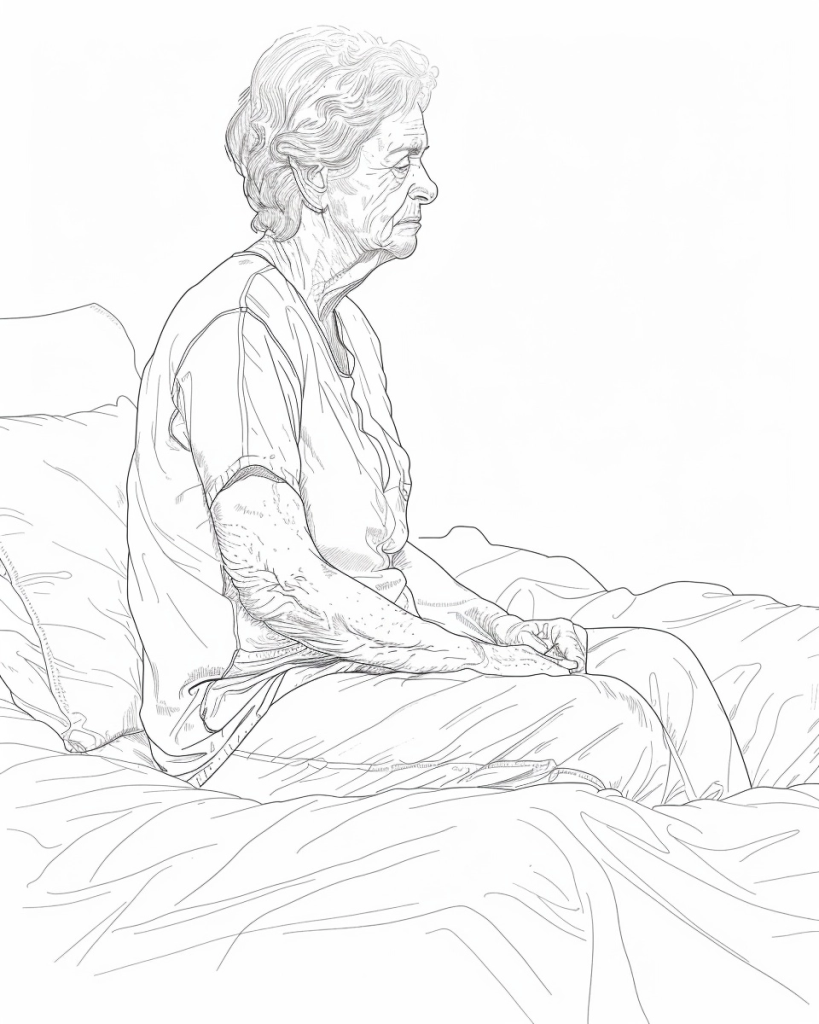
If you’re 55+ and living with chronic pain, I want you to hear this right away: you are not weak, you are not “just getting old,” and you are defiantly not alone. You’re also allowed to laugh—because laughter is the only thing that still works without a copay.
What Chronic Pain Feels Like (In Real Life Terms)
Chronic pain is NOT just pain. It’s pain PLUS
- fatigue that feels like your bones are tired
- brain fog that makes you walk into a room and forget your own name
- mood swings that show up like an uninvited relative
- the grief of not moving the way you used to
And then there is the frustrating social part: the awkward “You look fine” comments. (Yes, Brenda, and your casserole looks edible too.)
My Pain Plan (The Stuff That Actually Helps)
1) My Morning Truce with My Body
I never “jump out of bed.” I thaw, I take my time.
- 2–5 minutes of gentle stretching in bed
- slow sitting, then standing
- warm drink + a little protein
This isn’t laziness. It’s pacing. [Study 1]
2) Movement That Does not kill me most days.
Some days, movement helps. Other days, movement feels like a setup. I aim for small, consistent, low-impact movement:
- short walks, like up and down the hall. Or places like the mall (if they are still open) that have sitting places that are not too far apart.
- gentle strengthening. This can be done with soup cans and basic house hold activities. Do not go full Monty going to the gym.
- water exercise if available. I love the community centers or the YMCA for affordable water time.
The goal is function, not perfection. [Study 2]
3) Heat and Ice, My Two Best Frenemies (In the most Loving way)
Heat helps stiffness. Ice helps sharp, angry flare moments. I rotate based on what the pain is doing. Rotate how you do this. For example in one sitting, 15 minutes ICE, 15 minutes HEAT, and again 15 minutes ICE [Study 3]
4) Sleep: The Myth, The Legend, The Super Power!!
Chronic pain and sleep are in a toxic relationship. Good sleep time chases away the pain and gives your body a healing time without stress. 4 basics of a improving your sleep hygiene include,
- consistent bedtime
- lower lights
- no doom-scrolling (I fail sometimes—don’t judge me)
- a wind-down routine
Sleep hygiene won’t fix everything, but it can reduce the chaos in the joints. [Study 4]
5) Food and Inflammation (A Complicated Love Story)
I’m Human and can never do “perfect.” I do “better.”
- more whole foods when I can and less processed foods. Good old fashioned cooking like grandma did back in the day.
- Hydration, hydration, hydration. Did I say it enough? Water, tea, and some gatoraid. NOT soda pop, coffee or other concoctions.
- fewer ultra-processed days when possible, less Fast Food. This will be nicer on your wallet also.
No guilt. Just steady small improvements. [Study 5]
6) Stress and Grief, The Uninvited Guests
Pain is physical, but stress makes it so much worse. I use, and recommend the following;
- breathing, ya sounds easy, but you need to increase the oxygen levels in your body.
- simple mindfulness, like being grateful for small things in your life.
- distractions that actually work (music, a funny show, calling someone safe to just talk too.)
This helps my nervous system turn down the volume, and calm those stress hormones that like to make the pain levels yell. [Study 6]
7) Doctors, Meds, and Advocating for Yourself, Without Losing Your Mind
I bring notes. I bring questions. I bring my “I’m gonna understand exactly, what is said” notebook.
And I remind myself, I deserve care that makes sense too me, It’s my body.
FAQ
Is chronic pain normal aging?
NO!! Some aches can come with age, but chronic pain that affects function and requires evaluation and support from your support network is not normal aging. [Study 7]
What is a “flare up”?
A “flare up” is a spike in pain and symptoms. It often needs rest + pacing + calming the nervous system. [Study 1]
When should I seek urgent help?
If you have chest pain, sudden weakness, confusion, loss of bowel/bladder control, fever with severe pain, or a new severe headache—seek urgent care, like the emergency room.
Are canes/braces, walker and other adaptive equipment “giving up”?
No. They’re tools to help us stay independent and take good care of ourselves. Just like glasses and hearing aids, use what you need to to function well in your life.
What if exercise makes it worse?
Then it is WAY TOO MUCH or the wrong type. Start smaller and consider Occupational Therapy or Physical Therapy to learn where to start and help develop a good roadmap for you. [Study 2]
How do I explain pain to family?
Use function-based language, that is non emotional and objective, like, “I can’t stand longer than 10 minutes today.” It’s harder to argue with basic data. Do not let their emotions run what you can do.
What helps fatigue?
Pacing, sleep support, gentle movement, and simplifying tasks. Consistencies in your life, again an Occupational Therapist can help guide you with this. [Study 1]
How do I track pain without obsessing?
Track patterns: sleep, activity, stress, flare triggers—objectively. Use a separate journal for emotions.
A Gentle 7 Day starter Plan.
- Day 1: Write your top 3 pain triggers
- Day 2: Add a 5-minute gentle movement
- Day 3: Create a flare “comfort kit”
- Day 4: Improve one sleep habit
- Day 5: Ask for one practical help from someone who will not judge you.
- Day 6: Try heat/ice intentionally
- Day 7: Celebrate one win (yes, getting dressed counts). Be grateful for even the small things.
You’re not failing. You are adapting. And honestly? That takes grit. As they say “Old Age is not for Sissies”!
Study Notes- These are the studies that I sited for this article. Please read to help inform yourself in your Journey.
[Study 1] Biopsychosocial model (why pain is more than tissues).
Chronic pain is influenced by physical, psychological, and social factors—especially in older adults—so multi-angle treatment tends to work better than “one fix.”
Source: Miaskowski C, Blyth F, Nicosia F, et al. A Biopsychosocial Model of Chronic Pain for Older Adults. Pain Medicine. 2020.
[Study 2] Pacing / boom-bust prevention (why “push through” can backfire).
Activity pacing is commonly used to reduce symptom spikes and support steadier function (especially for fatigue + pain patterns), though methods vary.
Source: Barakou I, et al. Self-regulation of effort… (activity pacing discussion/review). 2023.
Plus (OT pacing evidence): AJOT article on pacing as a learned strategy. 2019.
[Study 3] Exercise therapy helps chronic low back pain (pain + function).
Exercise is probably effective for chronic low back pain versus no treatment/usual care, with moderate-certainty evidence for pain improvement.
Source: Hayden JA, et al. Exercise therapy for chronic low back pain. (Cochrane review). 2021.
[Study 4] Sleep intervention (CBT-I) helps when pain and insomnia travel together.
CBT-I improves sleep and can improve related outcomes (some studies include pain outcomes too) in chronic pain/insomnia populations.
Source: Selvanathan J, et al. Cognitive behavioral therapy for insomnia in patients with chronic pain: systematic review and meta-analysis. 2021.
[Study 5] Mindfulness and CBT both help chronic pain coping (and can reduce opioid dose in some groups).
A large RCT found both mindfulness-based therapy and CBT improved pain/function/QOL in adults with opioid-treated chronic low back pain.
Source: Zgierska AE, et al. Mindfulness-based therapy vs CBT for chronic low back pain (randomized clinical trial). 2025.
[Study 6] Major guideline: WHO (chronic primary low back pain) recommends non-surgical care.
WHO recommends education/self-care, exercise programs, some physical therapies, psychological therapies (e.g., CBT), and NSAIDs where appropriate.
Source: World Health Organization news release / guideline summary. 2023.
[Study 7] Major guideline: CDC opioid prescribing (chronic pain care emphasizes non-opioid & non-pharm options).
CDC guideline stresses maximizing nonpharmacologic and nonopioid therapies and shared decision-making for chronic pain.
Source: Dowell D, et al. CDC Clinical Practice Guideline for Prescribing Opioids for Pain — United States, 2022. MMWR. 2022.
(CDC clinical overview page)
[Study 8] Guideline specifically focused on older adults: AGS persistent pain pharmacologic management.
Provides older-adult-focused considerations and safety issues (polypharmacy, side effects, careful selection/monitoring).
Source: American Geriatrics Society Panel. Pharmacological management of persistent pain in older persons. J Am Geriatr Soc. 2009.
[Study 9] Older-adult overview: “Managing chronic pain in older people” review.
Reinforces biopsychosocial approach and highlights medication risks (drug–drug/drug–disease interactions) in older adults.
Source: Chan HKI, et al. Managing chronic pain in older people. 2022.
[Study 10] Heat/cold modalities: evidence supports short-term symptom relief in musculoskeletal contexts.
Reviews show heat and cold can reduce pain in certain scenarios; effects vary by condition and timing.
Source: Nossa F, et al. Heat Therapy for Musculoskeletal Pain Conditions. 2025.
[Study 11] Nutrition pattern example: Mediterranean diet and knee OA outcomes.
RCT comparing Mediterranean vs low-fat diets found changes in pain/stiffness/function measures in knee osteoarthritis populations.
Source: Sadeghi A, et al. Effects of a Mediterranean Diet Compared with a Low-Fat Diet on pain/stiffness/function in knee osteoarthritis. 2022.
[Study 12] Self-management programs for older adults (group-based RCT evidence).
An RCT tested a chronic pain self-management group for older adults, supporting structured coping + activity strategies.
Source: Ersek M, Turner JA, Cain KC, et al. RCT: chronic pain self-management group for older adults. Pain. 2008.